Understanding OSHA’s Site-Specific Training Requirements
OSHA requires this training annually, biannually, or at minimum at least once every two years. However, refresher training is required whenever there is an accident, near miss, or when your license expires. The regulation specifically mandates that forklift training must address the actual workplace conditions where operators will work, making generic online training insufficient for full compliance.
Forklift operator certification is recommended to be renewed at least every 2 years according to OSHA standards, with additional training required if incidents occur. More importantly, OSHA Standard 29 CFR 1910.178 requires training to be both equipment-specific and workplace-specific, covering the actual hazards, conditions, and operational requirements present in each facility.
The Legal Foundation for Site-Specific Training
OSHA’s powered industrial truck standard establishes clear requirements that cannot be met through generic online training programs. The regulation requires training to address specific workplace conditions, equipment types, and operational hazards that operators will encounter in their actual work environment.
This site-specific requirement exists because workplace hazards vary dramatically between facilities. A warehouse operation presents different challenges than a construction site, and indoor facilities have different considerations than outdoor operations. Generic training cannot address these variations effectively.
Why Online Training Falls Short
Online training programs typically provide general safety information that applies broadly across industries but fails to address the specific conditions and hazards present in individual workplaces. This gap leaves operators unprepared for the actual challenges they’ll face on the job.
More critically, online training cannot provide the hands-on evaluation required by OSHA regulations. The practical component of forklift certification must be conducted with actual equipment in conditions similar to the operator’s work environment—something impossible to achieve through computer-based training.
The Superiority of On-Site Forklift Training
On-site forklift training provides comprehensive preparation that addresses both OSHA requirements and practical workplace needs. This approach ensures operators receive relevant, applicable instruction that directly relates to their job responsibilities and work environment.
Real Equipment, Real Conditions
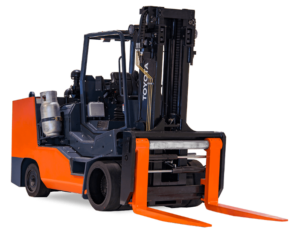
On-site training uses the actual forklift equipment operators will use daily, ensuring familiarity with specific controls, features, and operational characteristics. Different forklift models have varying control layouts, capacity ratings, and performance characteristics that affect safe operation.
Training in the actual work environment allows instructors to address specific hazards, traffic patterns, and operational challenges unique to each facility. This real-world context makes training more relevant and effective than generic scenarios used in online programs.
Immediate Hazard Recognition
Experienced instructors can identify and address site-specific hazards during on-site training sessions. This includes recognizing potential problems with facility layout, equipment maintenance, or operational procedures that could contribute to accidents.
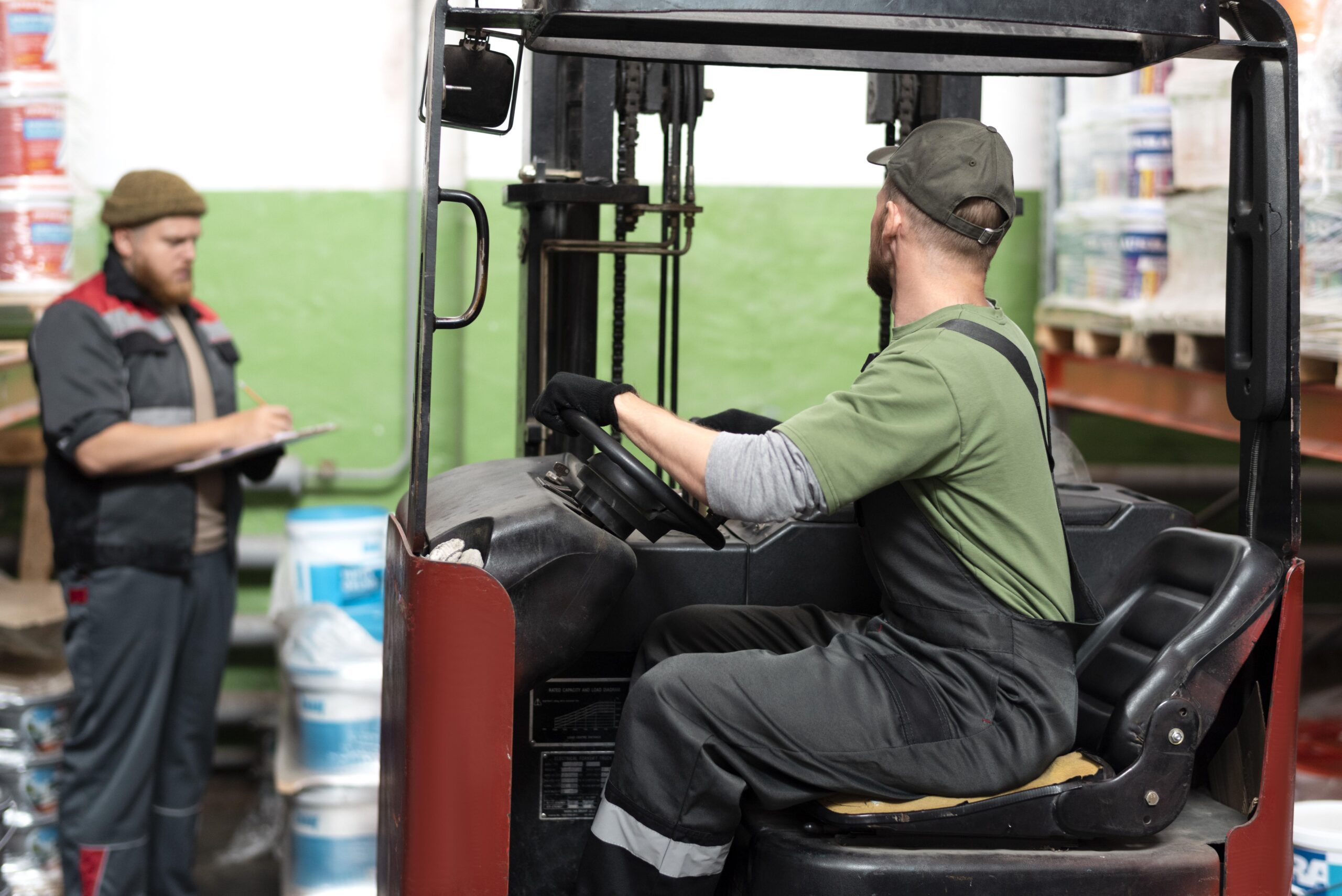
On-site evaluation allows instructors to observe how operators handle actual workplace challenges, providing immediate feedback and correction that prevents development of unsafe habits. This real-time coaching is impossible with online training programs.
Comprehensive Skills Development
Hands-on training develops muscle memory and operational confidence that cannot be achieved through computer-based instruction. Operating actual equipment under realistic conditions builds the practical skills necessary for safe workplace operation.
On-site training allows for progressive skill development, starting with basic operations and advancing to complex maneuvers and challenging scenarios operators will encounter on the job. This systematic approach ensures thorough competency development.
Florida’s Unique Training Considerations
Florida’s diverse industrial landscape creates specific training needs that require local expertise and understanding of regional operational challenges. From humid warehouse conditions to outdoor construction sites, Florida workplaces present unique considerations that affect forklift operation.
Climate and Environmental Factors
Florida’s humid climate affects equipment performance, load handling, and operator comfort in ways that impact safety and operational procedures. On-site training addresses these environmental factors and their impact on safe operation.
Seasonal weather patterns, including hurricane season preparations and extreme heat considerations, require specific operational procedures and safety awareness that generic training programs cannot address effectively.
Industry-Specific Applications
Florida’s economy includes major ports, aerospace manufacturing, agriculture, and tourism industries that each present unique forklift applications and safety considerations. On-site training can address industry-specific requirements and operational challenges.
Distribution centers serving Latin American markets, construction projects in coastal environments, and manufacturing facilities with specialized requirements all need customized training approaches that reflect their operational realities.
Regulatory Compliance Culture
Florida’s business environment emphasizes regulatory compliance and workplace safety, making thorough, compliant training essential for employer liability protection and worker safety. On-site training demonstrates commitment to exceeding minimum requirements.
Insurance carriers and regulatory agencies in Florida increasingly scrutinize training programs, making comprehensive, site-specific training a competitive advantage for businesses seeking favorable insurance rates and regulatory relationships.
The Forklift Safety Training Florida Advantage
At Forklift Safety Training Florida, we specialize exclusively in on-site training that meets and exceeds OSHA requirements while addressing the specific needs of Florida employers and operators. Our comprehensive approach ensures complete compliance and superior safety outcomes.
Our Comprehensive On-Site Program
Our training includes instruction, policy and procedure, safe use, inspections, maintenance, written exam, and hands-on evaluation. Valid OSHA certification issued. Our certified trainers provide site-specific OSHA-compliant instruction. English & Spanish available.
We conduct thorough workplace assessments before training begins, identifying specific hazards and operational challenges that must be addressed during instruction. This preparation ensures relevant, applicable training that directly benefits workplace safety.
Qualified, Experienced Instructors
Our certified instructors bring extensive real-world experience and deep knowledge of OSHA requirements to every training session. They understand both the regulatory framework and practical applications necessary for safe forklift operation.
Instructor expertise extends beyond basic operational skills to include hazard recognition, emergency response, and regulatory compliance that provides comprehensive preparation for workplace challenges.
Equipment-Specific Training
We provide training on the actual equipment types operators will use, ensuring familiarity with specific controls, features, and operational characteristics. This equipment-specific approach eliminates confusion and builds confidence in real workplace conditions.
Our training addresses different forklift categories including sit-down counterbalance trucks, stand-up reach trucks, rough terrain units, and specialized equipment used in various Florida industries.
Customized Content Development
Each training program is customized to address specific workplace conditions, operational procedures, and safety requirements unique to individual facilities. This customization ensures relevant, applicable instruction that directly improves workplace safety.
We work with employers to identify specific training needs and develop content that addresses actual workplace challenges rather than generic scenarios that may not apply to their operations.
Cost-Effectiveness of On-Site Training
While on-site training may appear more expensive initially than online alternatives, the total cost of ownership strongly favors comprehensive, site-specific instruction that prevents accidents and ensures full compliance.
Accident Prevention Value
The average forklift accident costs employers between $95,000 and $145,000 when injuries are involved, with property damage incidents averaging $12,000 to $25,000. Comprehensive on-site training that prevents even one accident more than justifies the investment in quality instruction.
Insurance carriers often provide premium discounts for employers with documented, comprehensive training programs that exceed minimum requirements. These discounts frequently offset training costs while providing enhanced protection.
Compliance Protection
OSHA citations for inadequate training can result in penalties ranging from $15,625 to $156,259 per violation. Proper site-specific training provides documentation of good faith compliance efforts that can reduce citation exposure and penalty assessments.
Legal protection provided by comprehensive training documentation often proves invaluable during incident investigations or legal proceedings related to workplace accidents.
Operational Efficiency
Well-trained operators work more efficiently, handle equipment more carefully, and experience fewer operational disruptions. The productivity improvements from quality training often justify the investment within weeks of completion.
Reduced equipment damage, lower maintenance costs, and improved operational reliability create ongoing value that compounds over time, making on-site training a sound business investment.
Common Misconceptions About Online Training
Many employers and operators are attracted to online training options due to perceived convenience and cost savings, but these benefits often prove illusory when full compliance requirements and safety outcomes are considered.
The Convenience Myth
While online training can be completed at any time, it cannot provide the hands-on evaluation required for OSHA compliance. Operators still need practical assessment with actual equipment, negating much of the convenience advantage.
Scheduling on-site evaluation sessions after online classroom training often proves more complicated and time-consuming than completing comprehensive on-site programs that address all requirements in coordinated sessions.
False Economy
The apparent cost savings of online training disappear when additional requirements for hands-on evaluation, site-specific instruction, and compliance documentation are factored into total program costs.
Hidden costs of online training include time spent on inadequate preparation, potential retesting fees, and the risk of incomplete compliance that could result in citations or accident liability.
Inadequate Preparation
Online training cannot prepare operators for the specific conditions, equipment, and challenges they’ll encounter in their actual workplace. This preparation gap creates safety risks and potential compliance problems.
Operators trained exclusively online often struggle with practical applications and real-world decision-making that could have been addressed through comprehensive on-site instruction.
Building a Culture of Safety Excellence
On-site training does more than meet minimum compliance requirements—it establishes a foundation for ongoing safety excellence that benefits organizations long after initial certification is complete.
Management Engagement
On-site training demonstrates visible management commitment to worker safety and regulatory compliance. This commitment enhances employee confidence and creates a culture where safety is genuinely valued rather than simply mandated.
Active management participation in on-site training programs reinforces safety messages and establishes clear expectations for ongoing safety performance throughout the organization.
Peer Learning Opportunities
Group training sessions create opportunities for experienced operators to share knowledge with newer team members, building collective safety awareness and reinforcing proper procedures through peer-to-peer learning.
On-site training often reveals operational improvements and safety enhancements that benefit the entire organization, creating value beyond individual operator certification.
Ongoing Relationship Building
Professional training providers who conduct on-site programs often develop ongoing relationships with employers that provide continuing value through refresher training, regulatory updates, and safety consultation services.
These relationships prove particularly valuable when incidents occur or regulatory requirements change, providing access to expert guidance and support when needed most.
Choosing the Right Training Provider
Selecting a qualified training provider is crucial for ensuring effective on-site training that meets OSHA requirements while addressing specific workplace needs and operational challenges.
Instructor Qualifications
Look for training providers whose instructors hold appropriate certifications and demonstrate extensive real-world experience with forklift operations and safety training. Qualified instructors understand both regulatory requirements and practical applications.
Instructor experience should include familiarity with various industries and operational environments, ensuring ability to address diverse workplace challenges and training needs effectively.
Program Comprehensiveness
Effective on-site training programs address all OSHA requirements while providing additional value through enhanced safety awareness, operational efficiency improvements, and regulatory compliance support.
Comprehensive programs include pre-training workplace assessment, customized content development, thorough instruction covering all required topics, practical evaluation, and complete documentation support.
Ongoing Support Services
The best training providers offer continuing support through refresher training, regulatory updates, safety consultation, and emergency response guidance that extends value beyond initial certification programs.
Consider providers who maintain relationships with employers and provide ongoing resources for maintaining safety excellence and regulatory compliance as conditions change and requirements evolve.
The Future of Forklift Training
As workplace safety regulations continue evolving and technology advances, the importance of comprehensive, site-specific training will only increase. Employers who invest in quality on-site training position themselves for success in an increasingly regulated environment.
Regulatory Trends
OSHA continues emphasizing site-specific training requirements and employers’ responsibility for ensuring adequate preparation for workplace-specific hazards and conditions. This trend favors comprehensive on-site training over generic alternatives.
Enforcement priorities increasingly focus on training adequacy and relevance to actual workplace conditions, making site-specific instruction essential for compliance protection.
Technology Integration
Modern forklift equipment increasingly includes advanced safety features and technological systems that require specific training for effective utilization. On-site training can address these technological advances in relevant workplace contexts.
Telematics, collision avoidance systems, and automated safety features require operator understanding that can best be developed through hands-on instruction with actual equipment.
Industry Evolution
As industries evolve and operational requirements change, the need for customized, relevant training becomes increasingly important. On-site training providers can adapt content and approaches to address emerging challenges and requirements.
The competitive advantage provided by superior safety training becomes more significant as labor markets tighten and employers compete for qualified, safety-conscious operators.
Conclusion
While online forklift training may appear convenient and cost-effective, it cannot provide the comprehensive, site-specific instruction required for full OSHA compliance and optimal safety outcomes. On-site training delivers superior results through real-world application, immediate hazard recognition, and customized content that addresses actual workplace conditions.
Florida employers who choose on-site training demonstrate commitment to safety excellence while protecting themselves from regulatory citations, accident liability, and operational disruptions. The investment in quality training pays dividends through reduced accidents, improved compliance, enhanced productivity, and strengthened safety culture.
At Forklift Safety Training Florida, we provide exclusively on-site training that exceeds OSHA requirements while addressing the specific needs of Florida employers and operators. Our comprehensive approach ensures complete compliance, superior safety outcomes, and long-term value that justifies the investment in professional instruction.
Don’t compromise on safety or compliance with inadequate online training alternatives. Choose the comprehensive, site-specific instruction that provides complete preparation for safe, productive forklift operation. Contact Forklift Safety Training Florida today to schedule on-site training that delivers results you can trust.