Construction sites, agricultural operations, and industrial facilities often face the question: should we use a telehandler or a forklift? While both machines lift and move materials, they serve distinct purposes with different capabilities, limitations, and operator requirements. Understanding these differences helps Florida contractors and facility managers select appropriate equipment while ensuring operators receive proper training for the machines they’ll actually use.
Understanding the Basic Equipment Differences
Before comparing operational capabilities and applications, it’s essential to understand the fundamental mechanical and design differences that distinguish telehandlers from forklifts. These aren’t just variations of the same equipment—they represent different engineering approaches to material handling challenges.
What Is a Forklift?
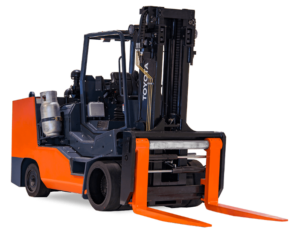
Forklifts are counterbalance vehicles designed primarily for lifting and moving palletized loads over relatively short distances on level surfaces. The term “counterbalance” refers to the weight positioned behind the front axle that offsets forward loads, creating a stability system based on the balance between rear counterweight and front load.
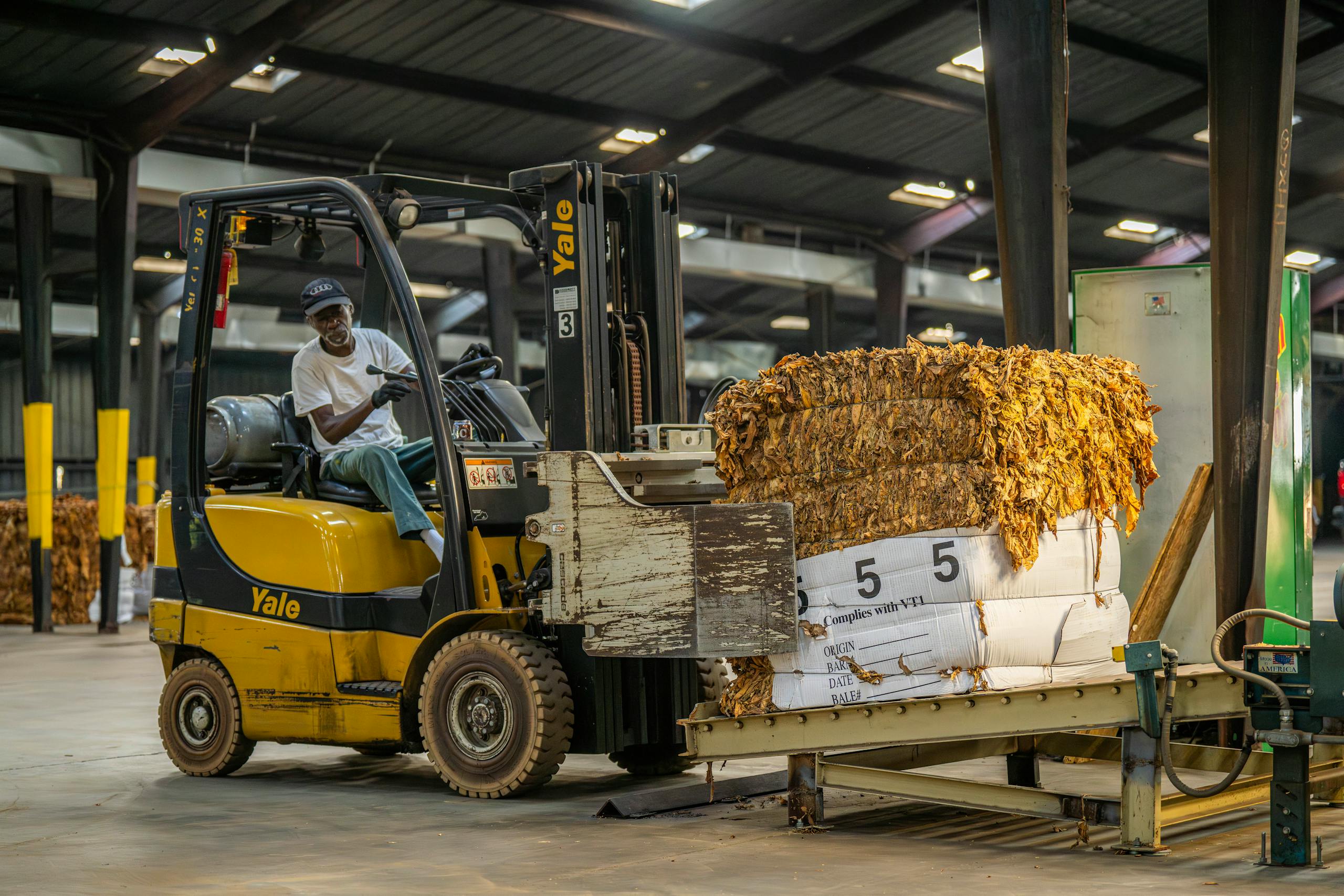
Standard warehouse forklifts feature cushion or solid tires, sit-down operator positions, and lifting capacities typically ranging from 3,000 to 15,000 pounds. These machines excel in indoor environments with smooth, level floors where their compact design and excellent maneuverability provide efficient material handling.
Rough terrain forklifts add pneumatic tires, higher ground clearance, and enhanced stability systems for outdoor use on unimproved surfaces. These machines handle construction sites, lumber yards, and outdoor storage facilities where standard warehouse forklifts can’t operate safely. Rough terrain forklift operations require specialized training addressing outdoor conditions and uneven surfaces.
The key characteristic of all forklifts is their fixed mast configuration. The forks move vertically along the mast but don’t extend horizontally away from the equipment—reach is limited to the fork length plus any forward tilt. This limitation affects where forklifts can access loads and how they must be positioned for loading operations.
What Is a Telehandler?
Telehandlers, also called telescopic handlers or zoom booms, feature extending booms that telescope outward and upward to position loads at various heights and distances from the equipment base. This telescoping capability fundamentally differentiates telehandlers from forklifts, allowing access to positions impossible for fixed-mast equipment.
Standard telehandlers typically offer lift heights from 20 to 55 feet with forward reach capabilities extending 15 to 40 feet beyond the equipment footprint. Load capacities range from 5,000 to 12,000 pounds, though capacity decreases significantly as boom extension and height increase.
Rotating telehandlers add 360-degree rotation capability, allowing operators to position loads in any direction without moving the equipment base. This rotation feature dramatically increases versatility, particularly in congested job sites where equipment repositioning is difficult.
Heavy-lift telehandlers provide capacities exceeding 12,000 pounds for specialized applications, though these larger machines sacrifice some of the maneuverability that makes standard telehandlers valuable on construction sites.
The telescoping boom creates a fundamentally different stability profile than counterbalance forklifts. As the boom extends, the moment arm increases, requiring careful attention to load charts that specify safe capacities at various boom angles and extension distances.
Visual and Operational Distinctions
Even casual observers can distinguish telehandlers from forklifts based on appearance and operation. Telehandlers feature prominent booms extending from the equipment body, larger overall footprints to provide stability for extended boom operations, and typically four-wheel steering or crab steering for enhanced maneuverability.
Forklifts present more compact profiles with vertical masts, rear-wheel steering creating tight turning radius, and generally smaller dimensions that facilitate navigation in confined spaces. The visual difference becomes obvious when equipment operates—telehandlers extend booms outward while forklifts maintain fixed footprints with vertical-only mast movement.
Capability Comparison: What Each Machine Does Best
Understanding capability differences helps employers select appropriate equipment for specific applications and recognize when operator training must address multiple equipment types for versatile operations.
Lift Height and Reach
Telehandlers provide superior lift height and forward reach compared to most forklifts. A standard telehandler easily reaches 30-40 feet high while extending 20+ feet forward, accessing second and third story elevations, positioning materials on building roofs, and reaching over obstacles to place loads in otherwise inaccessible locations.
This capability makes telehandlers invaluable for construction applications including steel erection, roofing material placement, and building envelope work. The ability to position materials precisely at elevation without scaffolding or cranes provides significant productivity advantages on many job sites.
Forklifts typically lift 15-20 feet maximum with standard configurations, though specialized high-reach models extend to 30+ feet. However, forklifts lack the forward reach of telehandlers—they must position directly beneath loads for lifting, limiting applications where positioning directly under lift points isn’t possible.
For warehouse applications with organized rack systems and clear aisles, forklift vertical lift capability proves adequate. But construction sites requiring material placement at various heights and horizontal positions demand telehandler reach and versatility.
Load Capacity Variations
Forklift capacity remains relatively consistent throughout the lift range when operating within rated parameters. A 5,000-pound capacity forklift can handle that weight whether lifted 6 inches or 15 feet, assuming proper load center and level operating surface.
This consistent capacity simplifies operations—operators know the machine can handle rated loads throughout its operating range without complex calculations or constant capacity verification. The stability triangle principle provides straightforward guidelines for safe operation.
Telehandler capacity decreases dramatically as boom extension and angle increase. A telehandler rated for 6,000 pounds at minimum boom extension might safely handle only 2,000 pounds when fully extended and elevated. This variable capacity requires operators to consult load charts constantly and understand how boom position affects safe working loads.
Load charts specific to each telehandler model indicate capacity at various boom angles and extension distances. Operators must learn to read these charts and apply them to actual operational scenarios—a skill set beyond what forklift operation requires.
Terrain Capability
Rough terrain forklifts handle outdoor surfaces including gravel, compacted dirt, and mild slopes where standard warehouse forklifts cannot operate. Their pneumatic tires, higher ground clearance, and four-wheel drive systems provide capability on unimproved surfaces, though significant limitations remain regarding maximum slopes and surface conditions.
Construction site forklift operations require awareness of ground conditions, slope limitations, and surface stability—training elements specific to outdoor equipment use.
Telehandlers generally provide superior rough terrain capability compared to forklifts due to larger tires, greater ground clearance, and design emphasis on outdoor construction applications. Most telehandlers include four-wheel drive, oscillating axles for uneven surface stability, and frame leveling systems that maintain operation on slopes where forklifts must cease operations.
This terrain advantage makes telehandlers the default choice for active construction sites with constantly changing surface conditions, outdoor storage yards with minimal site preparation, and applications where equipment must traverse rough access routes to reach work areas.
Versatility Through Attachments
Telehandlers accept numerous attachments transforming them from load-handling machines into multi-purpose construction equipment. Common attachments include standard fork carriages for pallet handling, buckets for material movement and placement, lifting hooks for rigging and hoisting, work platforms for elevated access, concrete buckets for placement, and specialized tools for specific applications.
This attachment versatility allows single machines to perform multiple roles throughout project phases, reducing equipment rental costs and simplifying site logistics. However, each attachment changes equipment operating characteristics, capacity, and stability requirements—factors requiring specific training.
Forklifts also accept various attachments including different fork lengths and configurations, clamps for handling specific materials, and rotators for specialized applications. However, the attachment variety and application versatility doesn’t match telehandler capability, with forklifts remaining primarily load-handling machines despite attachment options.
Training and Certification Requirements
OSHA requirements for telehandler and forklift operation differ based on equipment classification and regulatory interpretation. Understanding these requirements prevents compliance violations while ensuring operators receive appropriate preparation.
Forklift Certification Under OSHA 1910.178
OSHA Standard 1910.178 establishes comprehensive training requirements for powered industrial trucks including forklifts. The regulation mandates formal instruction, practical training, and performance evaluation before operators work independently.
Training must address truck-related topics including operating instructions and controls, differences between trucks and automobiles, steering and maneuvering, visibility limitations, vehicle capacity and stability, and vehicle inspection and maintenance requirements.
Workplace-related content must cover surface conditions, load composition and stability, pedestrian traffic, hazardous locations, and other conditions affecting safe operation. This site-specific training addresses actual work environments where forklifts operate.
Comprehensive forklift certification provides the foundation for powered industrial truck operation, though additional training is required for rough terrain models and specialized applications beyond standard warehouse use.
Telehandler Training Requirements
Telehandlers create regulatory ambiguity because they don’t fit neatly into OSHA’s powered industrial truck classification. While they perform load-handling functions similar to forklifts, their extending booms and construction-oriented applications raise questions about appropriate regulatory standards.
OSHA’s position has evolved to require telehandler training under both 1910.178 powered industrial truck standards when used as forklifts AND aerial work platform standards when equipped with personnel baskets. Some interpretations also reference construction standards for telehandler use on construction sites.
This regulatory complexity means telehandler training must address powered industrial truck principles including load capacity and stability, inspection requirements, and safe operating procedures, PLUS aerial lift concepts when personnel platforms are used, AND construction-specific hazards for job site applications.
Employers cannot simply provide forklift certification and assume operators are qualified for telehandler use. The extending boom, variable capacity, load chart interpretation, and attachment-specific operations all require training beyond standard forklift instruction.
Equipment-Specific Certification
The most important training principle: certification on one equipment type doesn’t automatically transfer to the other. Forklift certification doesn’t qualify operators for telehandler use, and telehandler certification doesn’t replace forklift-specific training for warehouse applications.
Operators need specific training on the actual equipment they’ll use, addressing its unique characteristics, capacity limitations, and operational considerations. Generic “material handling equipment” training fails to provide adequate preparation for either forklifts or telehandlers.
Facilities using both equipment types must ensure operators receive appropriate certification for each type rather than assuming competency transfers between similar-seeming machines. The operational differences, stability principles, and safety considerations differ enough to warrant distinct training programs.
Load Chart Interpretation
Telehandler load charts represent critical training elements often absent from forklift instruction. These charts display safe load capacities at various boom angles, extension distances, and attachment configurations—information operators must consult constantly during operations.
Reading load charts requires understanding boom angle effects on capacity, how extension distance reduces safe loads, and attachment weight impact on available capacity. Operators must be able to estimate boom position, determine corresponding chart values, and verify that actual loads don’t exceed safe capacities.
This skill set demands practice and verification that operators can accurately apply chart information to real operational scenarios. Training must include hands-on exercises using actual equipment and various load configurations, not just classroom chart review.
Forklift capacity plates provide simpler information—maximum capacity at standard load center. While operators must understand load center concepts and how unusual loads affect capacity, the information is more straightforward than multi-variable telehandler load charts.
When to Use Telehandlers vs Forklifts
Selecting appropriate equipment for specific applications optimizes productivity while ensuring safe operations. Understanding typical use cases helps employers make informed equipment choices.
Telehandler Applications
Construction sites represent prime telehandler territory where their reach, versatility, and terrain capability provide advantages that forklifts cannot match. Material placement at elevation, positioning over obstacles, and operation on rough unimproved surfaces all favor telehandler use.
Specific construction applications include framing lumber delivery to upper floors, roofing material placement, masonry supply to working elevations, steel beam positioning, window and door installation support, and concrete bucket placement for elevated pours.
Agricultural operations utilize telehandlers for hay and feed handling, equipment maintenance access, barn and facility construction, and general farm material movement. The rough terrain capability and high reach prove valuable in farm environments where surfaces are often unimproved and storage configurations vary.
Industrial maintenance at facilities with tall structures, outdoor storage, or difficult access areas benefits from telehandler reach and versatility. Equipment capable of positioning materials at height while traversing rough areas provides solutions where forklifts fall short.
Outdoor storage yards including building material suppliers, equipment rental facilities, and landscape material yards use telehandlers for customer loading, inventory organization at height, and material movement across rough surfaces.
Forklift Applications
Warehouse operations heavily favor forklifts where smooth floors, organized rack systems, and high-density storage reward compact maneuverable equipment. The tight turning radius and precise control of forklifts prove ideal for narrow aisles and congested facilities.
Manufacturing facilities use forklifts for work-in-process movement, finished goods handling, raw material positioning, and general internal logistics. The frequent load handling and short movement distances common in manufacturing suit forklift capabilities.
Distribution centers rely on forklifts for truck loading and unloading, order selection support, inventory movement, and cross-dock operations. The high-frequency repetitive handling in distribution environments rewards forklift speed and efficiency.
Retail operations including big-box stores, lumber yards with improved surfaces, and indoor showrooms use forklifts for receiving, stock replenishment, and customer loading from organized storage areas.
Situations Requiring Both Equipment Types
Many operations benefit from both telehandlers and forklifts in complementary roles. Construction sites might use telehandlers for rough terrain material placement and vertical reach while employing forklifts for organized staging area operations on improved surfaces.
Industrial facilities could utilize forklifts for indoor warehouse operations while maintaining telehandlers for outdoor yard work, building maintenance access, and loading/unloading in areas where precision indoor forklifts shouldn’t operate.
Understanding that these machines serve different purposes rather than representing interchangeable options helps employers build equipment fleets matching operational needs. Multi-equipment operations require operators certified on specific machines they’ll use rather than assuming one certification covers all material handling equipment.
Safety Considerations: Equipment-Specific Hazards
Each equipment type presents distinct safety challenges requiring specific awareness and operational techniques. Training must address these equipment-specific hazards rather than treating all material handling equipment identically.
Telehandler Stability Risks
Tip-over incidents represent the most serious telehandler hazard. The extending boom creates a cantilevered load that can overcome base stability when extended beyond safe limits, used on excessive slopes, or operated with loads exceeding variable capacity at current boom position.
Unlike forklifts with relatively consistent stability throughout their operating range, telehandlers require constant awareness of boom position, load weight, and surface conditions affecting stability. The stability margin changes continuously as boom angle and extension vary during operations.
Boom swing hazards occur when rotating telehandlers pivot with extended booms, potentially striking workers, equipment, or structures in the swing path. Operators must verify clearances in all directions before rotating and understand that boom tips travel greater distances than base rotation suggests.
Overhead power line contact becomes more likely with telehandlers due to their extended reach and height capability. Boom contact with energized lines creates electrocution risks even without direct boom-to-line contact—electricity can arc across air gaps, creating fatal hazards.
Training must address these telehandler-specific risks through load chart interpretation, stability assessment, clearance verification, and understanding how boom position affects safety margins. These elements often don’t appear in standard forklift training.
Forklift Operational Hazards
Pedestrian interactions occur more frequently with forklifts due to their extensive use in busy warehouses and facilities with heavy foot traffic. The compact size and indoor operation of many forklifts puts them in constant proximity to workers on foot.
Rack contact and damage from forklift impacts weakens storage systems, potentially causing catastrophic rack collapses. Narrow aisle operation and frequent rack interaction creates ongoing contact risks requiring operator awareness and precision.
Load handling incidents including dropped loads, tip-overs during turns, and stability loss on ramps represent common forklift hazards. While telehandlers face similar load-related risks, the higher frequency of forklift load handling and indoor operation near workers and inventory creates different exposure patterns.
Dock and trailer operations using forklifts create specific hazards including falls from docks, trailer separation, and grade transition challenges. These dock-specific risks receive emphasis in forklift training but may be less relevant to telehandler operations focused on outdoor material placement.
Common Safety Violations
Both equipment types share some common violation patterns but with different emphasis and frequency. Operating without proper training appears across all powered equipment types and represents the most frequently cited violation category.
Exceeding load capacity occurs with both forklifts and telehandlers but manifests differently—forklifts typically involve straightforward overload while telehandlers include failures to account for variable capacity at different boom positions.
Inadequate inspections affect both equipment types, though inspection focuses differ. Forklift inspections emphasize tires, brakes, and hydraulic systems while telehandler inspections add boom extension mechanisms, stabilizers, and load chart accessibility.
Cost Considerations: Rental, Purchase, and Operation
Equipment costs affect selection decisions and help employers understand the financial implications of choosing telehandlers versus forklifts for specific applications.
Rental Rates
Telehandler daily rental typically ranges from $300-$600 depending on capacity, reach capability, and features. Weekly rates run $1,000-$2,000 while monthly rentals cost $3,000-$6,000. Specialized rotating models or high-capacity units command premium rates.
Forklift rental costs less, with daily rates of $150-$350, weekly rates of $500-$1,200, and monthly rates of $1,500-$3,500 for standard capacities. Rough terrain models approach telehandler rental costs while warehouse forklifts represent the most economical powered equipment rentals.
For short-term needs or project-specific applications, rental provides cost-effective access to appropriate equipment without long-term ownership commitments. Understanding relative costs helps budget equipment needs accurately.
Purchase Prices
New telehandlers range from $80,000 to $200,000+ depending on capacity, features, and manufacturer. High-end rotating models with large capacities and extended reach capabilities command premium prices exceeding $250,000.
Used telehandlers offer value at $30,000-$100,000 depending on age, hours, and condition. The specialized nature and construction-industry focus of telehandlers creates robust used equipment markets.
New forklifts cost $20,000-$60,000 for standard warehouse models, with rough terrain units ranging $40,000-$80,000. High-capacity or specialized forklifts reach $100,000+ but remain generally less expensive than comparable-capacity telehandlers.
Used forklifts provide economical options starting under $10,000 for older warehouse models, with quality used equipment in the $15,000-$40,000 range offering reliable service for facilities with moderate usage requirements.
Operating Costs
Fuel consumption varies by equipment type and usage intensity. Telehandlers working at full extension and elevation consume fuel rapidly, while forklifts handling frequent loads also burn substantial fuel. Both equipment types offer diesel and propane options with different operating cost profiles.
Maintenance requirements for telehandlers include boom extension mechanisms, stabilizer systems, and more complex hydraulics than forklifts require. These additional systems increase service complexity and potentially higher maintenance costs.
Tire costs represent significant operating expenses for both equipment types, though telehandler tires typically cost more due to larger sizes required for rough terrain capability and stability.
Florida-Specific Considerations
Florida’s climate, industries, and construction patterns create specific considerations for telehandler and forklift selection and operation.
Construction Industry Applications
Florida’s extensive construction activity including residential development, commercial building, and infrastructure projects creates strong demand for both equipment types. Telehandlers dominate site work and vertical construction while forklifts serve staging areas and organized material yards.
Hurricane-resistant construction increasingly common in Florida may require material placement at specific elevations and configurations suited to telehandler reach and versatility. Building codes emphasizing wind resistance affect construction methods and equipment needs.
Coastal construction involves challenging access, sandy soils, and saltwater exposure affecting equipment selection and maintenance. Telehandlers with superior ground clearance and four-wheel drive prove valuable in coastal applications where site access often crosses beaches or unimproved areas.
Agricultural Operations
Florida’s agricultural sector including citrus, vegetables, and cattle operations uses both equipment types extensively. Telehandlers handle hay, feed, and equipment maintenance while forklifts serve packing houses, processing facilities, and organized storage areas.
Grove and field access often requires rough terrain capability that telehandlers provide. The ability to traverse rows, reach into trees or elevated structures, and handle loads on unimproved surfaces makes telehandlers valuable agricultural assets.
Climate Challenges
Heat and humidity affect operator comfort and equipment performance year-round in Florida. Enclosed cabs with air conditioning—available on many telehandlers and some forklifts—provide significant operator benefit during summer operations.
Afternoon thunderstorms during summer months create operational disruption. Training should address weather monitoring, criteria for suspending elevated operations during lightning threats, and equipment securing procedures.
Hurricane season preparations include equipment securing against high winds and potential flooding. Both telehandlers and forklifts require positioning away from vulnerable areas, disconnection of batteries, and documentation of locations for post-storm recovery.
Implementing Effective Training Programs
Employers operating both telehandlers and forklifts need systematic training approaches ensuring operators receive appropriate certification for equipment they’ll actually use.
Equipment-Specific Training Development
Develop or obtain separate training programs for telehandlers and forklifts rather than attempting to cover both in generic material handling equipment courses. Each requires specific content addressing unique operational characteristics, capacity principles, and safety considerations.
Professional training providers deliver equipment-specific programs meeting OSHA requirements while addressing practical operational needs. Specialized instruction ensures operators receive comprehensive preparation rather than superficial overviews.
Multi-Equipment Certification Strategies
Operators requiring both telehandler and forklift certification benefit from sequential training building on foundational knowledge. Starting with forklift certification establishes powered equipment basics, then adding telehandler instruction builds on that foundation while addressing equipment-specific differences.
This progressive approach proves more effective than attempting concurrent training on both equipment types. Operators develop competency on one machine before learning the distinct characteristics of the other, preventing confusion and building systematic understanding.
Documentation and Verification
Maintain clear records identifying which operators hold certifications for which specific equipment types. Certification cards, operator badges, or database systems should clearly distinguish telehandler certification from forklift qualification.
Supervisors need quick verification of operator qualifications before authorizing equipment use. Visual identification systems help prevent situations where operators use equipment they haven’t been trained on due to assumptions about transferable skills.
Conclusion
Telehandlers and forklifts serve distinct material handling purposes with different capabilities, applications, and training requirements. Understanding these differences helps Florida employers select appropriate equipment for specific operational needs while ensuring operators receive proper certification for the machines they’ll use.
The extending boom capability of telehandlers provides reach and height access impossible for forklifts, making them invaluable for construction applications, outdoor material placement, and situations requiring versatile multi-purpose equipment. However, this capability comes with variable capacity, increased complexity, and higher costs than many forklift applications require.
Forklifts excel in organized environments with frequent load handling, providing compact maneuverability, consistent capacity, and efficient operation in warehouses, manufacturing facilities, and similar applications. Their simplicity and focused purpose often make them better choices than more versatile telehandlers for specific use cases.
The key is matching equipment capabilities to actual operational needs rather than assuming one machine can handle all material handling requirements. Many operations benefit from both equipment types in complementary roles—construction sites using rough terrain forklifts alongside telehandlers, or industrial facilities employing warehouse forklifts indoors while maintaining telehandlers for outdoor operations.
Most importantly, recognize that proper training differs between these equipment types. Don’t assume forklift certification qualifies operators for telehandler use, or that telehandler experience provides adequate preparation for forklift operation. Invest in equipment-specific training that genuinely prepares operators for the machines they’ll run.
Contact Forklift Safety Training Florida today to schedule comprehensive training for both forklifts and rough terrain equipment that addresses the specific characteristics and requirements of each equipment type. Our certified trainers provide site-specific OSHA-compliant instruction. English & Spanish available.