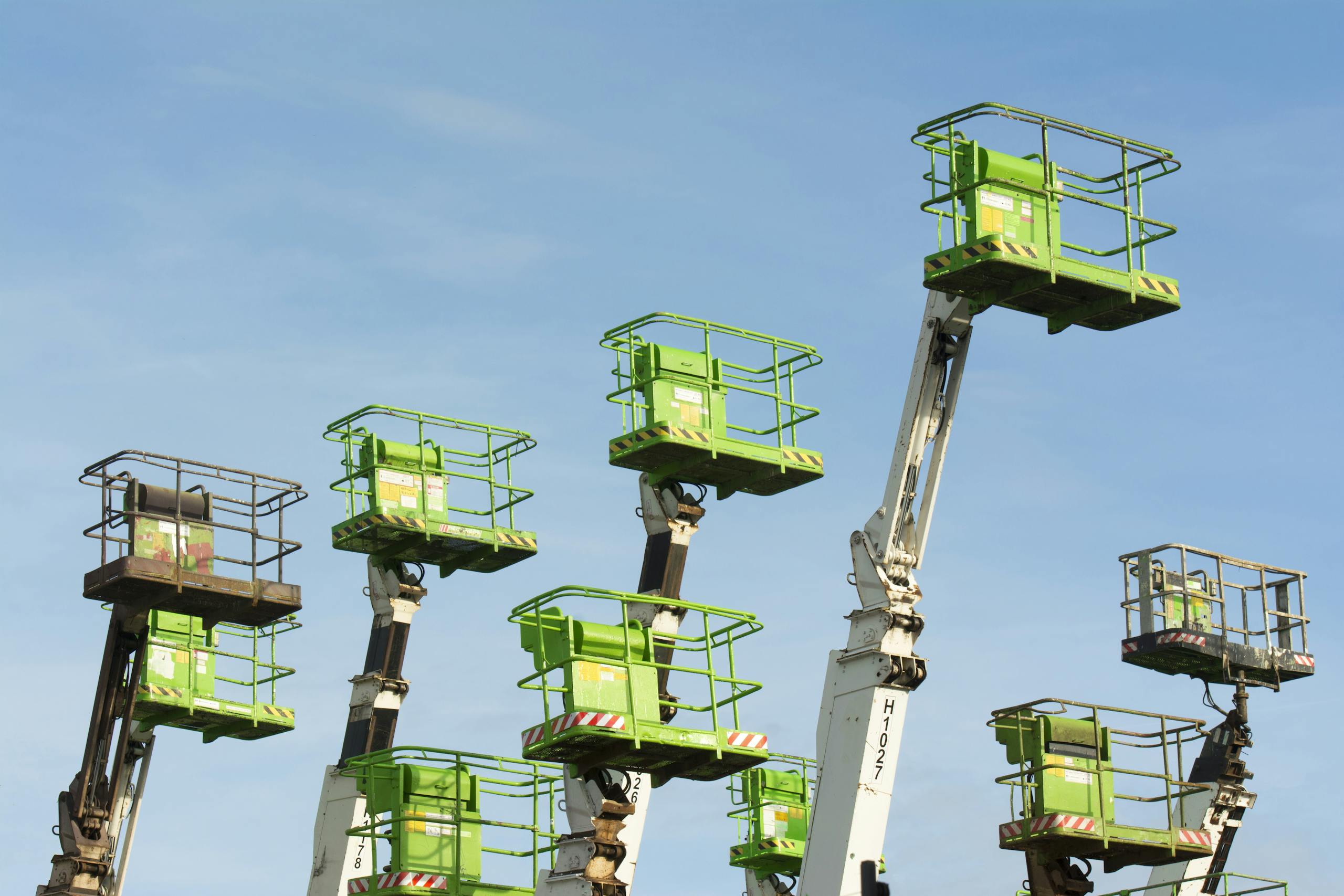
Aerial lift violations consistently rank among the most frequently cited OSHA infractions during workplace inspections, resulting in penalties ranging from thousands to over $160,000 per violation. For Florida employers using boom lifts, scissor lifts, or other aerial work platforms, understanding common violations and implementing prevention strategies protects workers while avoiding costly citations that disrupt operations and damage company reputations.
Why Aerial Lift Violations Are So Common
Aerial work platforms appear in virtually every industry—construction, warehousing, manufacturing, retail, facilities maintenance, and utilities all rely on elevated access equipment. This widespread use creates numerous opportunities for violations, particularly when employers underestimate training requirements or fail to recognize that seemingly minor procedural shortcuts constitute serious OSHA violations.
The consequences of aerial lift accidents often prove severe. Falls from elevated platforms account for a significant percentage of construction fatalities, while tip-overs and struck-by incidents involving aerial lifts cause catastrophic injuries even when workers don’t fall. OSHA’s focus on fall protection makes aerial lift compliance a priority during inspections across all industry sectors.
Many violations stem from misunderstanding regulatory requirements. Employers may believe that training completed years ago satisfies current obligations, that guardrails eliminate the need for fall protection on all platforms, or that experienced operators don’t need formal certification. These misconceptions create compliance gaps that become apparent only during OSHA inspections or, worse, after serious accidents.
Understanding the most frequently cited violations helps employers implement targeted prevention strategies addressing the specific compliance failures inspectors encounter most often. Rather than implementing generic safety programs, focus resources on the violations that actually appear during inspections.
Violation #1: Operating Without Proper Training and Certification
Citation: OSHA 1926.453(a)(2) – Training Requirements
The single most common aerial lift violation involves allowing untrained or inadequately trained operators to use equipment. This violation appears in multiple forms: operators who never received any formal training, workers who received training on different equipment types than what they’re currently operating, expired certifications that haven’t been renewed, and inadequate documentation proving training occurred.
Why This Violation Occurs
Many employers assume that experienced workers familiar with elevated work can operate aerial lifts without formal training. Others believe that brief verbal instructions or shadowing experienced operators satisfies training requirements. Some fail to recognize that aerial lift and scissor lift certifications require separate training due to different equipment characteristics and regulatory requirements.
Temporary workers, contractors, and new hires often begin operating equipment before completing formal certification, creating violations even when employers have good training programs for regular staff. The pressure to meet project deadlines or staffing shortages leads supervisors to authorize equipment use before proper training occurs.
Prevention Strategies
Implement verification systems ensuring only certified operators access aerial lifts. Physical controls like keypad locks, key control procedures, or equipment checkout systems create barriers preventing unauthorized use. Color-coded operator badges or certification cards displaying equipment types help supervisors quickly verify qualifications.
Establish clear policies requiring comprehensive aerial lift training before any equipment operation. New hires, regardless of experience, must complete facility-specific training addressing the actual equipment they’ll use and site conditions where they’ll operate. No exceptions for “experienced” operators or urgent project needs.
Track certification expiration dates systematically rather than relying on operator memory or supervisor awareness. Automated alerts 30-60 days before expiration allow proactive renewal scheduling that prevents certification gaps. Calendar systems, spreadsheet trackers, or specialized safety software all serve this purpose.
Document all training thoroughly including operator names, specific equipment types covered, training dates, trainer qualifications, and evaluation results. These records prove compliance during inspections and provide defense against citations following accidents. Store documentation centrally where supervisors can quickly verify operator qualifications.
Partner with qualified training providers who understand OSHA requirements and deliver equipment-specific instruction. Professional trainers ensure training meets regulatory standards, addresses current best practices, and provides documentation supporting compliance defenses.
Violation #2: Failure to Use Fall Protection on Boom Lifts
Citation: OSHA 1926.453(b)(2)(v) – Body Belt Requirements
OSHA 1926.453 explicitly requires body harnesses with lanyards for all workers in boom-type aerial lifts. This mandatory personal fall arrest requirement applies regardless of guardrail presence, operator experience, or perceived stability. Despite the clear regulatory language, failure to use proper fall protection remains one of the most frequently cited aerial lift violations.
Why This Violation Occurs
Operators often feel secure within guardrailed platforms and view harnesses as unnecessary or burdensome. The extra time required to don harnesses and connect lanyards creates incentive for shortcuts, particularly during brief tasks or when repeatedly entering and exiting platforms.
Confusion about which equipment types require harnesses contributes to violations. Some operators believe harness requirements apply only to bucket trucks or extremely high elevations, not recognizing that all boom-type lifts mandate personal fall arrest regardless of working height.
Inadequate harness availability, poorly maintained equipment, or uncomfortable harness designs discourage proper use. When harnesses are stored in distant locations, damaged and uncomfortable to wear, or improperly sized, operators find reasons to skip this critical safety measure.
Prevention Strategies
Provide body harnesses and lanyards for every boom lift operator, stored at equipment locations for immediate access. Harnesses should be adjustable for proper fit, comfortable for extended wear, and in good condition without fraying, tears, or damaged hardware.
Train operators on proper harness fitting, adjustment, and use. Many workers have never worn fall protection equipment and don’t understand how to achieve proper fit or verify secure connections. Hands-on training ensuring competency with fall arrest equipment prevents improper use.
Establish attachment point protocols clarifying where lanyards connect. OSHA requires attachment to the boom or basket—not to adjacent structures, anchor points on buildings, or other locations that may seem convenient. Improper attachment creates fall hazards when boom movement occurs.
Inspect fall protection equipment regularly as part of pre-operational checks. Damaged harnesses, worn lanyards, or defective connections must be removed from service immediately. Establish replacement procedures ensuring damaged equipment is quickly replaced rather than remaining in use due to unavailability of replacements.
Enforce harness requirements consistently without exceptions. When supervisors allow occasional non-compliance or participate in violations themselves, operators perceive requirements as optional guidelines rather than mandatory safety measures. Consistent enforcement builds cultures where fall protection becomes automatic.
Violation #3: Inadequate Equipment Inspections
Citation: OSHA 1926.453(b)(1) – Equipment Inspection Requirements
Aerial lifts must be inspected before each use and regularly maintained in safe operating condition. Violations occur when inspections don’t occur at all, inspections are cursory without actually examining critical components, defects are identified but equipment remains in service, and inspection documentation is absent or inadequate.
Why This Violation Occurs
Time pressure encourages operators to skip inspections and begin work immediately, particularly when equipment appears to be functioning normally. Many workers don’t understand what to inspect or what defects warrant removing equipment from service, leading to superficial walkarounds that miss critical problems.
Inadequate training on inspection procedures leaves operators uncertain about their inspection responsibilities. When training focuses exclusively on operation without covering proper inspections, workers lack knowledge needed to conduct meaningful equipment checks.
Lack of inspection documentation systems allows inspections to be forgotten or performed inconsistently. Without checklists, logs, or other tracking mechanisms, there’s no accountability for completing inspections or verification that they occur systematically.
Prevention Strategies
Develop equipment-specific inspection checklists covering all critical components that operators must examine before use. Checklists should be simple, visual, and focused on items operators can actually assess without specialized tools or expertise.
Train operators thoroughly on inspection procedures including what to examine, what defects to look for, and when equipment must be removed from service. Use actual equipment during training to demonstrate inspection techniques and show examples of common defects.
Implement inspection documentation systems requiring operators to complete and sign checklists before equipment use. Digital systems, mounted clipboard logs, or tag-based tracking all work—the key is consistent use and supervisor review of completed inspections.
Establish clear defect reporting and equipment removal procedures. Operators need confidence that reporting problems won’t result in criticism or pressure to continue using defective equipment. Simple processes for tagging out unsafe equipment and initiating repairs encourage prompt reporting.
Conduct periodic supervisor spot-checks verifying that inspections actually occur and are performed adequately. Observing operators during inspections identifies training needs and reinforces the importance of thorough examination rather than cursory walkarounds.
Violation #4: Improper Positioning and Outrigger Use
Citation: OSHA 1926.453(b)(2)(i) – Set Brakes and Outriggers
Aerial lifts must be positioned on firm, level surfaces with brakes set and, when equipped with outriggers, outriggers properly deployed before elevating platforms. Violations include operating on slopes exceeding equipment ratings, inadequate outrigger deployment or positioning, operating with outriggers on soft ground without adequate support, and failure to set brakes during elevated operations.
Why This Violation Occurs
Operators often underestimate surface slope, believing inclines are within acceptable ranges when they exceed equipment limitations. Without tools to measure grade accurately, subjective assessment leads to operation on excessively sloped surfaces.
Outrigger deployment takes time and effort, creating incentive to skip this step for brief tasks or when equipment appears stable without deployment. Operators may not understand how significantly outriggers improve stability, viewing them as unnecessary except for extreme reach or height.
Soft ground, asphalt, or other inadequate surfaces may not visibly show distress during outrigger deployment, but settle under load once platforms elevate. Operators don’t always recognize when ground conditions require additional support like outrigger pads or mats.
Prevention Strategies
Provide grade measurement tools like digital levels or inclinometers for operators to verify surface slope before positioning equipment. Objective measurement eliminates guesswork and provides clear go/no-go criteria for safe operation.
Train operators on outrigger deployment procedures specific to equipment used in your operations. Demonstrate proper positioning, extension verification, and load distribution across all outriggers. Explain how outriggers affect stability and why proper deployment is critical.
Require outrigger pads or support mats for operations on asphalt, soil, or any surface other than concrete. These pads distribute loads, prevent surface penetration, and provide visual confirmation of proper outrigger deployment.
Establish policies requiring outrigger use whenever equipment is so equipped, regardless of whether operators believe deployment is necessary. Eliminating judgment calls about when outriggers are required ensures consistent use and removes temptation to skip deployment.
Include outrigger deployment verification in pre-operational inspection checklists. Visual confirmation that all outriggers are extended, positioned properly, and adequately supported becomes part of systematic pre-use checks.
Violation #5: Modifications Without Manufacturer Approval
Citation: OSHA 1926.453(a)(1) – Equipment Modifications
Aerial lifts cannot be modified without written approval from manufacturers. Common violations include adding attachments or accessories not approved by manufacturers, removing or disabling safety devices or interlocks, welding or drilling into structural components, and installing non-standard controls or operating systems.
Why This Violation Occurs
Well-intentioned attempts to improve equipment functionality or address perceived deficiencies lead to unauthorized modifications. Operators or maintenance staff may add tool storage, auxiliary power sources, or convenience features without recognizing that any modification requires manufacturer approval.
Safety devices that operators find annoying or restrictive get disabled or bypassed. Tilt sensors that prevent operation on slopes, outrigger interlocks requiring deployment before elevation, or platform load sensors that limit capacity all potentially face unauthorized disabling.
Field repairs using welding or drilling to attach brackets, reinforcements, or replacement components create structural modifications that may compromise equipment integrity. Maintenance personnel may not understand that even minor structural alterations require engineering review and approval.
Prevention Strategies
Establish clear policies prohibiting any equipment modifications without formal engineering review and manufacturer approval. Communicate these policies to operators, maintenance staff, and supervisors who might otherwise authorize modifications.
Inspect equipment regularly for unauthorized modifications. Look for welded attachments, drilled holes, added brackets, disabled safety devices, or non-standard components suggesting modifications occurred without proper approval.
Provide manufacturer-approved accessories meeting operational needs rather than allowing field-fabricated solutions. Standardized tool trays, material handling attachments, and auxiliary equipment from manufacturers eliminate incentive for unauthorized modifications.
Train operators and maintenance staff on the prohibition against modifications and explain why manufacturer approval is required. Understanding that modifications can affect stability, structural integrity, and safety system function helps personnel recognize the importance of this requirement.
Document all approved modifications with manufacturer correspondence, engineering approvals, and installation records. This documentation proves compliance when authorized modifications exist and helps identify any unauthorized changes.
Violation #6: Allowing Riders or Exceeding Platform Capacity
Citation: OSHA 1926.453(b)(2)(iv) – Platform Loading
Aerial lift platforms have rated capacities that include workers, tools, and materials. Violations occur when total platform loads exceed rated capacity, unauthorized personnel ride platforms, people ride on guardrails or outside designated platform areas, and materials are stacked or positioned unsafely on platforms.
Why This Violation Occurs
Platform capacity plates display maximum loads, but operators don’t always estimate actual weights accurately. Tools, materials, and multiple workers may collectively exceed capacity even when no single element seems excessive.
Pressure to transport materials or additional workers leads to overloading rather than making multiple trips. Time constraints create incentive to maximize each lift, gradually pushing beyond safe limits.
Workers unfamiliar with equipment may ride platforms without understanding capacity implications. Supervisors, additional crew members, or visiting personnel may request platform rides without operators recognizing that their presence creates overload conditions.
Prevention Strategies
Train operators on capacity assessment including typical weights of tools, materials, and workers. Provide guidance on estimating total platform loads rather than just memorizing maximum capacity numbers.
Post capacity information prominently at equipment controls and on platforms. Clear signage displaying weight limits and typical equipment weights helps operators make informed loading decisions.
Establish policies limiting platform occupancy to specific numbers of workers appropriate for equipment capacity. Simple rules like “maximum two workers plus tools” provide easy guidelines that prevent overloading in most situations.
Provide material handling alternatives for transporting heavy items or bulk materials. Using ground-based material handling equipment to position materials near work areas reduces need to transport heavy loads on platforms.
Verify platform loads before elevation, particularly when materials or multiple workers are present. Quick visual checks and discussion of what’s on platforms help identify potential overload situations before elevation occurs.
Violation #7: Operating Near Overhead Power Lines
Citation: OSHA 1926.453(b)(2)(vi) – Electrical Hazards
Aerial lifts must maintain minimum clearance distances from overhead power lines—typically 10 feet for lines rated 50kV or less, with greater distances required for higher voltages. Violations include operating within minimum clearance distances, inadequate planning for power line proximity, failure to verify line voltage and required clearances, and lack of dedicated spotters during operations near power lines.
Why This Violation Occurs
Overhead power lines become “background” infrastructure that workers stop noticing in familiar work environments. Routine operations near power lines create complacency about electrical hazards that should trigger heightened awareness.
Boom lift reach capability allows positioning near or even contacting power lines that seem distant from equipment base positions. Operators focused on reaching work positions may not track boom proximity to overhead conductors.
Inadequate planning for work near power lines leads to discovering proximity issues only after beginning operations. Without pre-job surveys identifying electrical hazards and establishing safe working procedures, reactive responses during active work create violation risks.
Prevention Strategies
Conduct pre-job surveys identifying all overhead power lines in work areas. Document line locations, verify voltages with utility companies, and calculate required clearance distances before beginning operations.
Implement dedicated spotter requirements for all aerial lift operations near overhead power lines. Spotters positioned to observe both equipment and power lines provide continuous monitoring that prevents clearance violations.
Use range-limiting devices when available on equipment operating regularly near power lines. These devices restrict boom movement to safe zones, providing physical barriers against inadvertent power line approach.
Train operators on electrical hazard recognition, required clearances for various voltage levels, and emergency procedures for electrical contact. Understanding that electrocution doesn’t require direct contact—arcing can occur across air gaps—emphasizes the importance of maintaining clearances.
Establish work exclusion zones around power lines where aerial lift operations are prohibited unless special procedures and utility coordination occur. Clear no-go zones eliminate judgment calls about acceptable proximity.
Violation #8: Lack of Rescue Plans for Elevated Workers
Citation: OSHA 1926.453 – Emergency Procedures
While not always resulting in specific citations during routine inspections, inadequate rescue planning becomes a serious issue when emergencies occur. Violations include no established rescue procedures for platform occupants, inadequate training on emergency descent systems, failure to coordinate with emergency services about elevated rescue capability, and lack of rescue equipment or tools for emergency descent.
Why This Violation Occurs
Employers focus on preventing emergencies rather than planning for response when prevention fails. The belief that proper operation eliminates emergency risks leads to inadequate preparation for equipment failures, medical emergencies, or other situations requiring emergency platform evacuation.
Emergency descent systems on aerial lifts require specific knowledge to operate correctly. Without training and periodic practice, operators can’t effectively use these systems when genuine emergencies occur.
Coordination with local fire departments and emergency services about aerial lift rescue capabilities often doesn’t occur until actual emergencies develop. This lack of pre-planning creates delayed response and potentially dangerous improvised rescue attempts.
Prevention Strategies
Develop site-specific rescue plans addressing aerial lift emergencies including equipment malfunctions trapping workers at height, medical emergencies requiring rapid platform evacuation, fires or other hazards necessitating immediate descent, and severe weather approaching during elevated operations.
Train operators on emergency descent procedures for all aerial lift types used in operations. Periodic hands-on practice ensures familiarity with emergency systems and builds confidence in ability to execute emergency descent.
Coordinate with local emergency services providing information about aerial lift types, typical working heights, and site access for emergency vehicles. This pre-planning facilitates rapid, effective response when emergencies occur.
Maintain emergency descent tools and equipment in accessible locations. Battery-powered descent systems, manual override tools, and emergency communication equipment should be readily available and in verified working condition.
Include emergency scenarios in operator training and periodic drills. Practicing emergency response builds muscle memory and reveals gaps in plans or procedures that can be corrected before real emergencies occur.
Violation #9: Scissor Lift Guardrail Removal or Damage
Citation: OSHA 1926.451(g)(1) – Guardrail Requirements
Scissor lifts require intact guardrails meeting specific height and strength requirements. Violations include operating with missing, damaged, or improperly installed guardrails, removing guardrail sections without implementing alternative fall protection, gates or access points not properly closed during elevation, and makeshift guardrails not meeting OSHA specifications.
Why This Violation Occurs
Guardrail sections may be removed to accommodate materials, allow closer access to work surfaces, or create loading convenience. Once removed, guardrails may not be reinstalled before platform elevation.
Damaged guardrails from impacts, corrosion, or normal wear may not be promptly repaired or replaced. Equipment remains in service with compromised fall protection, creating violations and serious fall hazards.
Gates or hinged guardrail sections intended for loading access remain open during elevated operations when operators forget to close them or believe they don’t pose fall risks while working away from open sections.
Prevention Strategies
Include guardrail integrity checks in pre-operational inspections. Verify that all sections are present, undamaged, properly installed, and meet height requirements before allowing platform elevation.
Establish policies prohibiting guardrail removal except during loading or unloading on ground level. When removal is necessary, require alternative fall protection like body harnesses before elevation occurs.
Implement immediate equipment removal from service when guardrail damage is identified. Tags or locks preventing unauthorized use ensure damaged equipment doesn’t operate until repairs are completed.
Train operators on the critical importance of intact guardrails as primary fall protection on scissor lifts. Understanding regulatory requirements and fall risks associated with compromised guardrails encourages proper reporting and maintenance.
Install warning systems or interlocks on scissor lifts that prevent elevation when gates are open or guardrail sections are removed. These technological solutions provide backup preventing human error.
Violation #10: Inadequate Manufacturer Manual Availability
Citation: OSHA 1926.453(b)(1) – Manufacturer Requirements
Aerial lift manufacturer manuals containing operating instructions, inspection procedures, and maintenance requirements must be available to operators. Violations include manuals missing or not accessible to operators, procedures inconsistent with manufacturer guidelines, operating equipment in ways prohibited by manufacturers, and failure to follow manufacturer-specified inspection intervals.
Why This Violation Occurs
Manuals get lost, damaged, or separated from equipment during rental returns, transfers between job sites, or equipment sales. Replacement manuals aren’t obtained, leaving operators without manufacturer guidance.
Digital manuals stored in office locations or on company servers aren’t accessible to operators in field locations where equipment actually operates. Without practical access, manuals can’t guide daily operations.
Generic operating procedures developed internally may conflict with manufacturer-specific requirements for particular equipment models. Without consulting actual manuals, these conflicts go unrecognized.
Prevention Strategies
Maintain manufacturer manuals in weatherproof storage mounted on equipment or in nearby accessible locations. Physical manuals at equipment locations ensure availability when operators need guidance.
Obtain replacement manuals for any equipment lacking documentation. Most manufacturers provide free downloads or replacement manuals upon request. Digital copies stored on tablets or smartphones provide backup access.
Train operators on how to use manufacturer manuals including where to find operating procedures, inspection checklists, capacity information, and emergency instructions. Familiarity with manual organization helps operators quickly locate needed information.
Develop standard operating procedures based on manufacturer guidelines rather than generic industry practices. Reference specific manual sections in training materials to reinforce the connection between procedures and manufacturer requirements.
Include manual review in annual refresher training. Reviewing manufacturer guidance periodically ensures operators remain current with proper procedures and haven’t developed shortcuts conflicting with requirements.
Building Comprehensive Compliance Programs
Avoiding aerial lift violations requires systematic approaches addressing training, equipment maintenance, operational procedures, and documentation management. Isolated fixes targeting individual violations prove less effective than comprehensive programs treating compliance as integrated safety management.
Creating Culture of Compliance
Leadership commitment to safety and compliance sets organizational tone. When supervisors and managers consistently follow safety procedures, enforce requirements without exceptions, and prioritize compliance over production pressure, workers internalize the importance of proper practices.
Open communication about safety concerns and near-misses identifies problems before they cause citations or injuries. Workplace accident prevention depends on workers feeling comfortable reporting issues without fear of criticism or reprisal.
Recognition for proper practices reinforces desired behaviors more effectively than exclusively punitive approaches to violations. Celebrating safety achievements, acknowledging workers who identify hazards, and rewarding consistent compliance builds positive associations with safety requirements.
Leveraging Professional Training
Professional aerial lift training providers deliver current expertise on OSHA requirements, industry best practices, and equipment-specific operations. Rather than developing in-house programs that may miss critical elements, partnering with qualified trainers ensures comprehensive instruction.
Forklift Safety Training Florida provides OSHA-compliant aerial lift and scissor lift certification addressing all common violation areas. Our training includes instruction, policy and procedure, safe use, inspections, maintenance, written exam, and hands-on evaluation. Valid OSHA certification issued. Our certified trainers provide site-specific OSHA-compliant instruction. English & Spanish available.
Continuous Improvement Through Auditing
Regular self-audits identify compliance gaps before OSHA inspections occur. Using the same criteria OSHA inspectors apply helps employers see their operations through inspector eyes and correct problems proactively.
Incident investigation and near-miss analysis reveal system weaknesses requiring attention. Treating incidents as learning opportunities rather than simply assigning blame helps organizations improve processes and prevent recurrence.
Industry benchmarking and peer learning expose employers to best practices and innovative compliance solutions. Participating in trade associations, safety councils, and industry forums provides access to collective wisdom about effective compliance strategies.
Florida-Specific Compliance Considerations
Florida’s construction activity, tourism industry, and facilities management sectors create high aerial lift usage across the state. Understanding local factors helps employers tailor compliance programs to actual operating conditions.
Industry Concentrations
Florida’s extensive theme park and entertainment industry uses aerial lifts for maintenance, construction, and show support operations. These applications often involve work around public areas, requiring extra attention to crowd control and public safety beyond standard OSHA requirements.
Coastal construction and high-rise building projects common in Florida create demanding aerial lift applications involving height, weather exposure, and complex logistics. These challenging conditions increase violation risks and demand rigorous compliance programs.
Hurricane preparation and recovery operations after storms involve intensive aerial lift use for building inspection, emergency repairs, and utility restoration. The urgency of these operations creates pressure that can lead to procedural shortcuts and compliance failures.
Weather Challenges
Frequent afternoon thunderstorms require clear protocols for suspending elevated operations when lightning threatens. Training should address weather monitoring, criteria for work cessation, and procedures for safely descending before storms arrive.
Hurricane season preparations include securing aerial lifts against high winds and potential flooding. While not traditional operational compliance, understanding these seasonal requirements helps operators recognize their broader equipment responsibilities.
Intense heat and humidity affect operator alertness and decision-making during extended elevated operations. Training addressing heat stress recognition and prevention helps maintain operator capability to follow safety procedures in Florida’s demanding climate.
Conclusion
Common aerial lift OSHA violations share a pattern—they result from inadequate training, procedural shortcuts, and systemic failures rather than isolated operator errors. Understanding the violations that appear most frequently during inspections allows Florida employers to implement targeted prevention strategies addressing actual compliance risks.
The most cited violations involving training deficiencies, fall protection failures, inadequate inspections, and improper positioning all have straightforward prevention strategies based on comprehensive training, systematic procedures, and consistent enforcement. Treating compliance as integrated safety management rather than as burdensome regulatory obligation creates workplaces where violations simply don’t occur.
Aerial lift operations don’t have to be compliance minefields where any inspector visit threatens citations. Employers who invest in proper training, maintain equipment systematically, follow manufacturer guidelines, and document their programs thoroughly avoid violations while providing genuinely safer workplaces for their teams.
Don’t wait for an OSHA inspection or serious accident to address aerial lift compliance. Implement comprehensive programs now that prevent violations before they occur. Contact Forklift Safety Training Florida today to schedule aerial lift and scissor lift training that addresses all common violation areas and builds genuine compliance capability across your organization.